Linn
Linn Keel SE Sub-Chassis
Linn Keel SE Sub-Chassis
Available to Order
Linn Keel SE Sub-Chassis
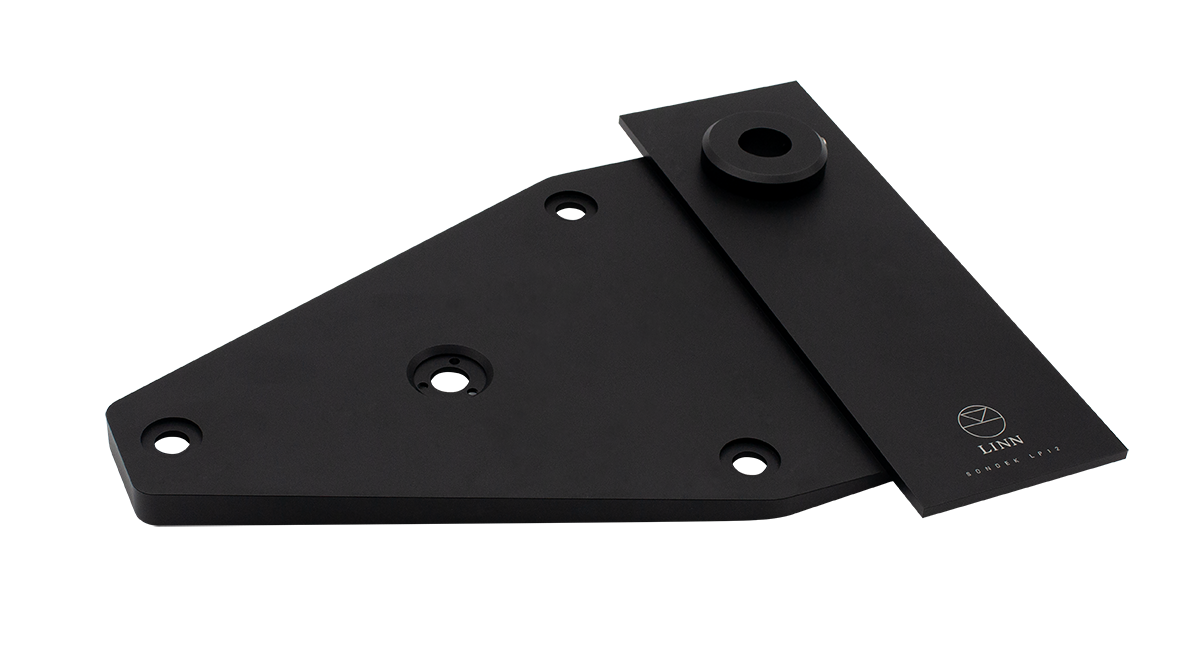
The Keel SE is Linn's reference sub-chassis for the Sondek LP12 — the component that sits at the mechanical heart of the turntable, carrying the bearing, the tonearm, and the platter as a coupled system suspended from the plinth on three springs. Sub-chassis design is not a secondary consideration in the LP12 architecture; it is the discipline that determines how well the suspension does its job, how cleanly acoustic energy is managed within the turntable's structure, and how accurately the tonearm and bearing are held in relation to one another. The Keel SE is the result of Linn applying cutting-edge virtual prototyping and enhanced in-house machining capabilities to every one of those requirements simultaneously.
300% Increase in Stiffness — Why It Matters
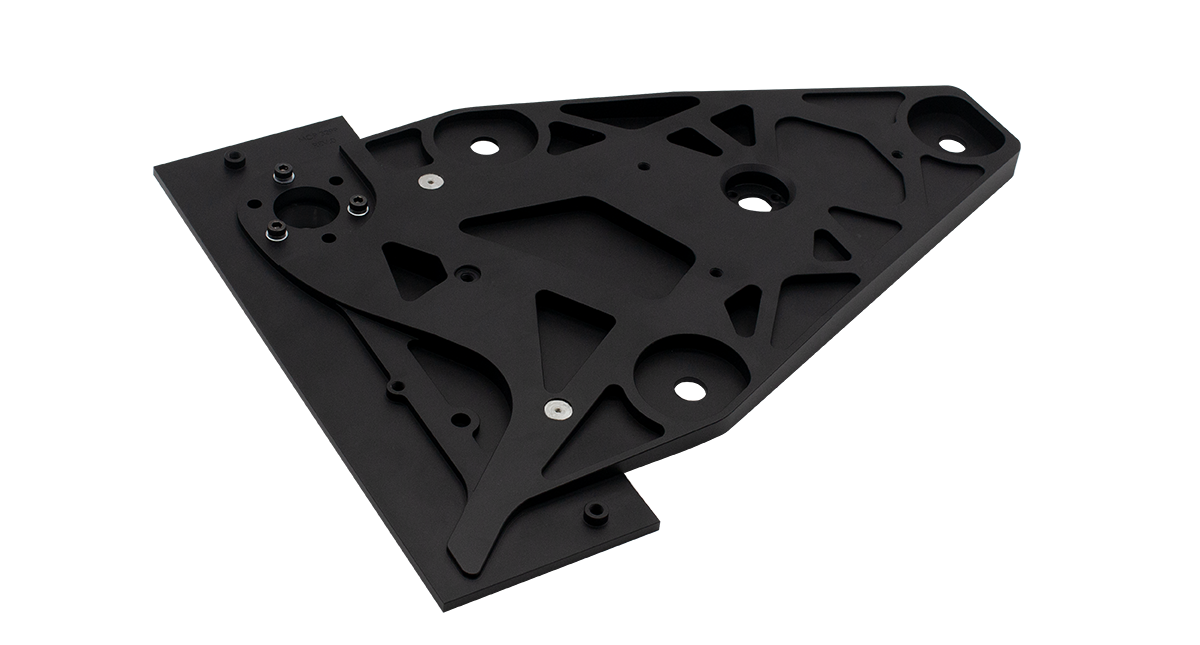
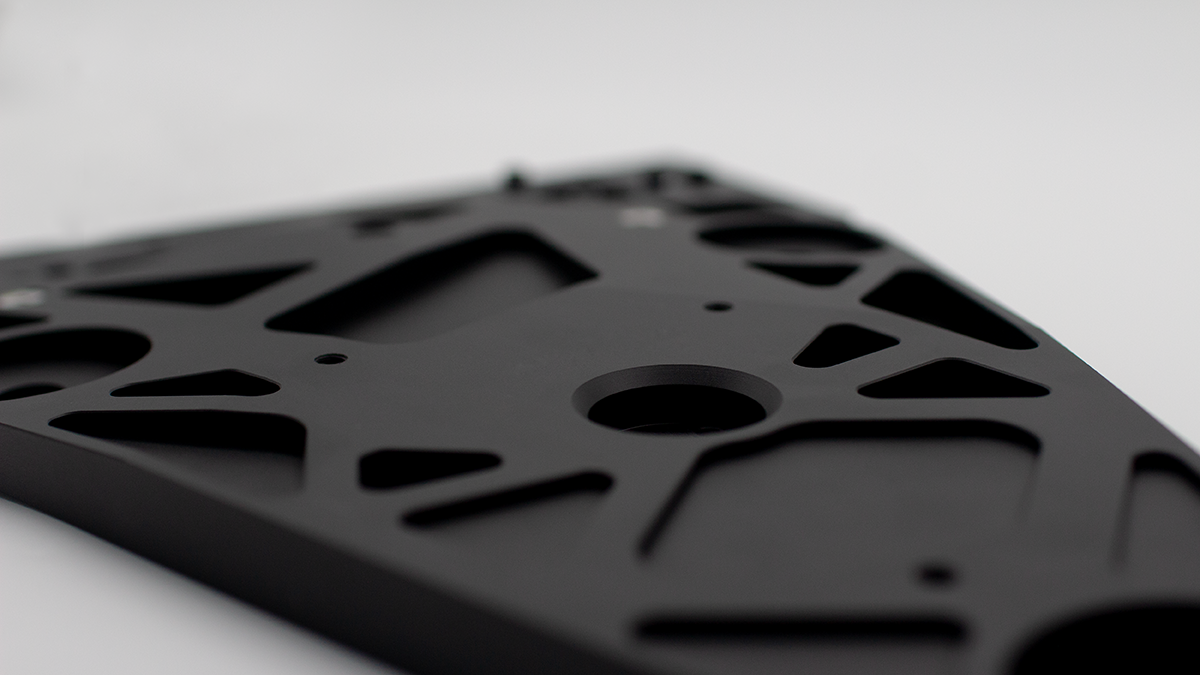
The Keel SE achieves a 300% increase in sub-chassis stiffness compared to previous designs — not by adding mass, but through an intricate bracing structure machined into the underside of the component, developed using a combination of manual and computer-aided optimisation. Stiffness in a sub-chassis has a specific acoustic consequence: a stiffer structure forces its resonant frequencies higher in the spectrum and substantially lowers their energy. Resonances that occur lower in the audio band, at higher energy levels, are the ones most capable of interfering with the delicate signal the cartridge is generating above them. By raising those frequencies and reducing their amplitude, the Keel SE moves its own structural behaviour into territory where it has far less potential to degrade what the listener hears.
This is structural engineering applied to a listening problem. The bracing geometry on the underside of the Keel SE is the physical record of that process — a pattern of material and void that arrived at its final form through iterative virtual prototyping rather than intuition or convention.
Optimised Resonant Behaviour — Energy Dissipation, Not Accumulation
Stiffness alone is not the complete answer. A sub-chassis that is stiff but unable to dissipate the energy it receives will store and re-radiate it — returning acoustic energy to the bearing and cartridge as noise at a later moment. The Keel SE is designed not only to force resonances higher in frequency but to break up and dissipate problematic acoustic energy more effectively than previous sub-chassis designs. The two properties work together: higher-frequency resonances at lower energy are also easier to dissipate, so the Keel SE's stiffness advantage compounds its dissipation advantage. The energy that reaches the cartridge from the sub-chassis structure is reduced in both frequency and amplitude — which is the correct result, and it is the result of treating stiffness and dissipation as a single engineering problem rather than two separate ones.
Ideal Distribution of Mass — The Suspension Geometry Problem
A sub-chassis that carries more mass towards one spring point than the others creates an unequal load on the suspension — one spring works harder than the others, the system's balance point shifts, and the acoustic isolation properties of the suspended design are compromised because the suspension is not operating as it was designed to. The Keel SE addresses this directly: aluminium is machined away from calculated areas beneath the armboard so that the centre of mass is balanced more evenly across all three spring points than in other sub-chassis designs. The consequences are reduced inertia in the suspended system, improved weight distribution between the springs, and improved acoustic isolation properties — the LP12's fundamental mechanical advantage over a non-suspended turntable, operating closer to its theoretical optimum.
Who Is It For?
The Keel SE is for LP12 owners at the upper end of the upgrade path — those already running a high-specification tonearm such as the Linn Krane Tonearm or above, and a Linn Karousel Bearing Kit, who want to address the sub-chassis as the next meaningful step. It is the sub-chassis fitted to the Linn Klimax LP12 Turntable and the Linn LP12 Selekt Turntable at the highest build levels, and it is the reference against which all other LP12 sub-chassis options are measured.
For those considering a complete high-level LP12 build, the Keel SE combines correctly with the Linn Bedrok Plinth, the Linn Karousel Bearing Kit, and a reference-level tonearm. The Linn Klimax System Hub and Linn Exaktbox Sub represent the system-level components with which an LP12 built around the Keel SE is most fully realised.
Buying from Martins Hi-Fi
Martins Hi-Fi has been in Norwich since 1968. Elizabeth Gould runs the business today, and we stock only brands we have heard properly and stand behind.
The Keel SE requires professional fitting — suspension balance, bearing alignment, and armboard geometry all need to be set correctly after a sub-chassis change for the LP12 to perform as designed. We carry out the complete installation on our LP12 service bench and will not return a deck until every parameter is correctly set. If the Keel SE is part of a broader upgrade — alongside a Karousel bearing, a tonearm change, or a Bedrok plinth — speak to us first about the correct sequence and the most effective route to the build you are targeting.
When you get in touch, you'll be speaking with Dave and Chris — experienced specialists who can advise on this product and your whole system.
Contact us at info@martinshifi.co.uk, call 01603 627010, or WhatsApp on 07554 687137. You can read more about how we work on our Why Martins Hi-Fi page. We are at 85–91 Ber Street, Norwich, NR1 3EY.