Linn
Linn Radikal Standard Power Supply
Linn Radikal Standard Power Supply
Available to Order
Linn Radikal Standard Power Supply
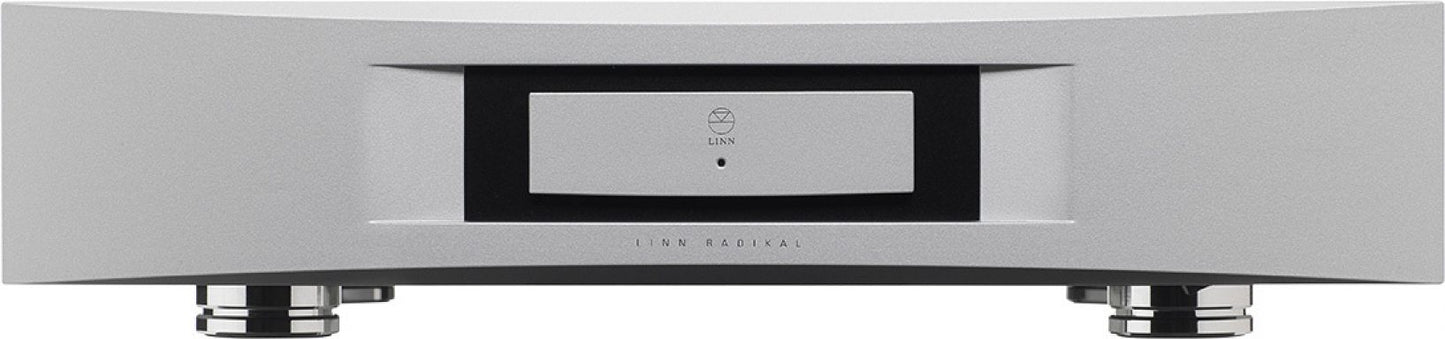
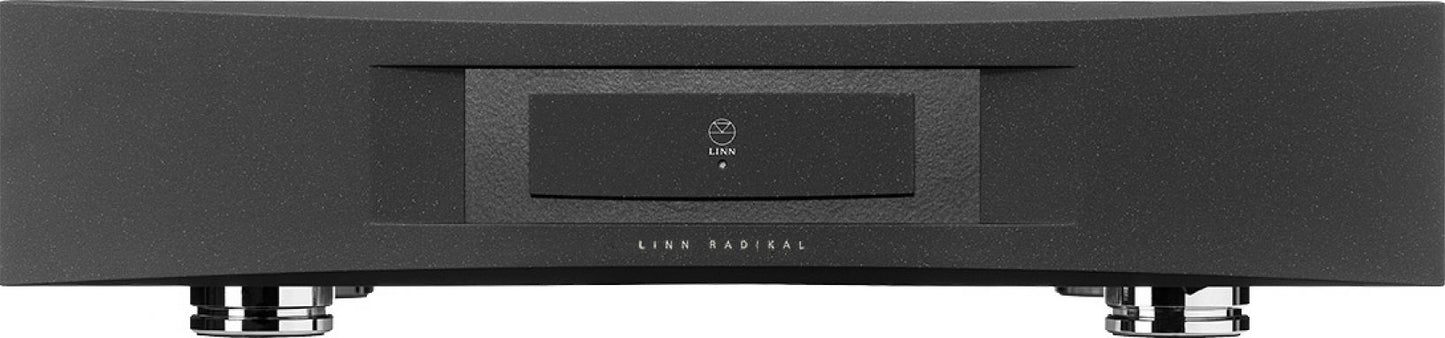
The Radikal is the component that transforms how an LP12 handles time — the motor controller and power supply that replaces the AC synchronous motor architecture of earlier LP12 specifications with an actively managed brushed DC system whose platter speed is checked and corrected on every single rotation. At £4,550, the Radikal Standard is the entry point into Radikal technology on the LP12, sitting above the Lingo in the motor control hierarchy and below the Klimax Radikal — and its position in the range is not a minor gradation. The step from Lingo to Radikal Standard is one of the most significant single upgrades available on the LP12 platform, addressing the primary determinant of timing, pitch stability, and musical coherence at a level that no passive motor control system can approach.
Speed stability is not an academic concern on a turntable. Every deviation from 33⅓rpm — however brief, however small — is a timing error that reaches the listener as pitch instability, smeared transients, and a loss of the sense that music is happening as a unified event rather than a sequence of individual notes. The LP12's reputation for timing — for PRAT in the truest sense — rests on its ability to maintain rotational precision under real-world conditions: varying stylus load as the groove modulates, bearing friction that changes as the mechanism warms, environmental vibration that imposes varying drag on the platter. The Radikal addresses all of these variables actively, on every rotation, in real time. The Lingo cannot.
Active Digital Speed Management — The Core Technology
The Radikal replaces the LP12's original AC synchronous motor with a brushed DC motor. The distinction matters profoundly. An AC synchronous motor runs at a speed determined by mains frequency — a frequency that varies, that carries noise from the supply, and that cannot be corrected by the motor controller because there is no feedback loop between platter and controller. The DC motor in the Radikal is under active digital control: the system measures platter speed on every rotation and applies corrections as required, maintaining 33⅓rpm with a precision and consistency that the best AC synchronous system cannot match.
If stylus drag increases as the groove modulates — and it does — the Radikal compensates. If bearing friction changes as the oil warms — and it does — the Radikal compensates. If a footfall imposes a sudden load on the platter — the Radikal compensates. The correction happens on the timescale of a single rotation: fast enough to be inaudible as a correction, effective enough to ensure that the deviation it corrects never reaches the signal. The result is a platter speed that stays closer to 33⅓rpm — and to 45rpm on the second speed — than any passive or mains-locked system in the LP12's history.
Acoustic Isolation Enclosure — Keeping the Motor Out of the Music
The Radikal's motor control electronics and power supply are housed in a separate outboard enclosure — physically removed from the LP12 plinth, acoustically designed to prevent motor vibration from reaching the listening room, and electrically isolated from the sensitive signal path inside the plinth. This is not a cosmetic consideration. The motor in any turntable is a source of vibration and electrical interference. By housing the Radikal's control circuitry and motor drive electronics externally, Linn ensures that none of what the motor generates contaminates the sub-chassis, the bearing, or the tonearm. The LP12 plinth receives clean, regulated power and motor drive — the Radikal keeps everything else at a distance.
The enclosure itself is acoustically treated: internal damping minimises the motor noise that would otherwise be audible in a quiet listening room, and the housing geometry is designed to prevent mechanical resonances from the motor assembly from propagating into the support surface.
Radikal Supply for Urika and Urika II
The Radikal Standard provides a dedicated, regulated low-noise power output for the Linn Urika and Linn Urika II internal phono stages. This is one of the Radikal's most important secondary functions: by powering the Urika from a supply derived within the Radikal's regulated architecture rather than a separate mains transformer, Linn eliminates an entire class of mains-borne noise from the phono stage circuit. A conventional external power supply for a phono stage carries all the noise and interference present on the mains. The Radikal's regulated output does not. The Urika and Urika II are not merely compatible with the Radikal — they are designed to be powered by it, and their performance in that configuration is meaningfully better than it would be with any alternative supply.
This means the Radikal, Urika, and the LP12 sub-chassis together form an integrated system whose interdependencies are engineering decisions, not installation conveniences. The Radikal is required to operate the Urika or Urika II. The Urika performs at its best powered by the Radikal. The LP12 performs at its best with both correctly installed. Each component is better in the presence of the others, and the combination is substantially greater than the sum of its parts.
Radikal Standard vs Klimax Radikal
Both the Standard and Klimax Radikal variants use the same brushed DC motor and the same core active digital speed management technology. The Klimax Radikal distinguishes itself through the Utopik power supply housing — nearly 14kg of machined aluminium with fully independent, dedicated output rails for motor control and Urika power, and a level of supply regulation and isolation that is significantly more refined than the Standard's. The audible improvement of the Klimax over the Standard is real and consistent — but the Standard Radikal already delivers reference-grade speed stability, and for LP12 builds at Selekt specification or below, it is the correct and entirely sufficient choice. The Klimax Radikal belongs on an LP12 at Klimax specification — the Linn Klimax LP12 — where the sub-chassis, tonearm, and cartridge are all operating at a level that can fully reveal what the Klimax supply achieves. On a Linn LP12 Selekt Turntable or below, the Standard Radikal is the correct specification — not a compromise, but the right answer for the platform level it serves.
Technical Specifications
| Motor type | Brushed DC |
| Speed management | Active digital — checks and corrects on every rotation |
| Speeds supported | 33⅓ rpm and 45 rpm (electronic switching) |
| Phono stage power output | Regulated supply for Urika / Urika II |
| Housing | External — acoustically isolated enclosure |
| Compatible LP12 | All generations |
Who Is It For?
The Radikal Standard is the single most impactful upgrade available to any LP12 running Lingo or lower motor control. Its effect on timing, pitch stability, and musical coherence is immediate and transformative — not a marginal refinement, but a fundamental change in how the LP12 handles the most basic requirement of any turntable. It is the correct specification for every LP12 at Majik or Selekt level, and the mandatory prerequisite for anyone intending to install a Urika or Urika II internal phono stage. If your LP12 is not yet on Radikal, this is where the upgrade path leads — and nothing else in the LP12 hierarchy delivers an equivalent improvement for equivalent investment.
Buying from Martins Hi-Fi
Martins Hi-Fi has been in Norwich since 1968. Elizabeth Gould runs the business today, and we stock only brands we have heard properly and stand behind.
Fitting the Radikal involves motor replacement, internal wiring changes, and full LP12 suspension rebalancing — professional installation is essential, and we carry out the complete process as part of our LP12 servicing work. The deck will not leave our workshop until every parameter is correctly set and the Radikal is operating as intended. If the Radikal is part of a broader LP12 upgrade — combined with a Urika installation, a tonearm change, or a sub-chassis upgrade — we will plan the complete sequence with you before any work begins.
When you get in touch, you'll be speaking with Dave, Chris and Tim — experienced specialists who can advise on this product and your whole system.
Contact us at info@martinshifi.co.uk, call 01603 627010, or WhatsApp on 07554 687137. You can read more about how we work on our Why Martins Hi-Fi page. We are at 85–91 Ber Street, Norwich, NR1 3EY.