Linn
Linn Ekstatik Moving Coil Cartridge
Linn Ekstatik Moving Coil Cartridge
Available to Order
Linn Ekstatik Moving Coil Cartridge
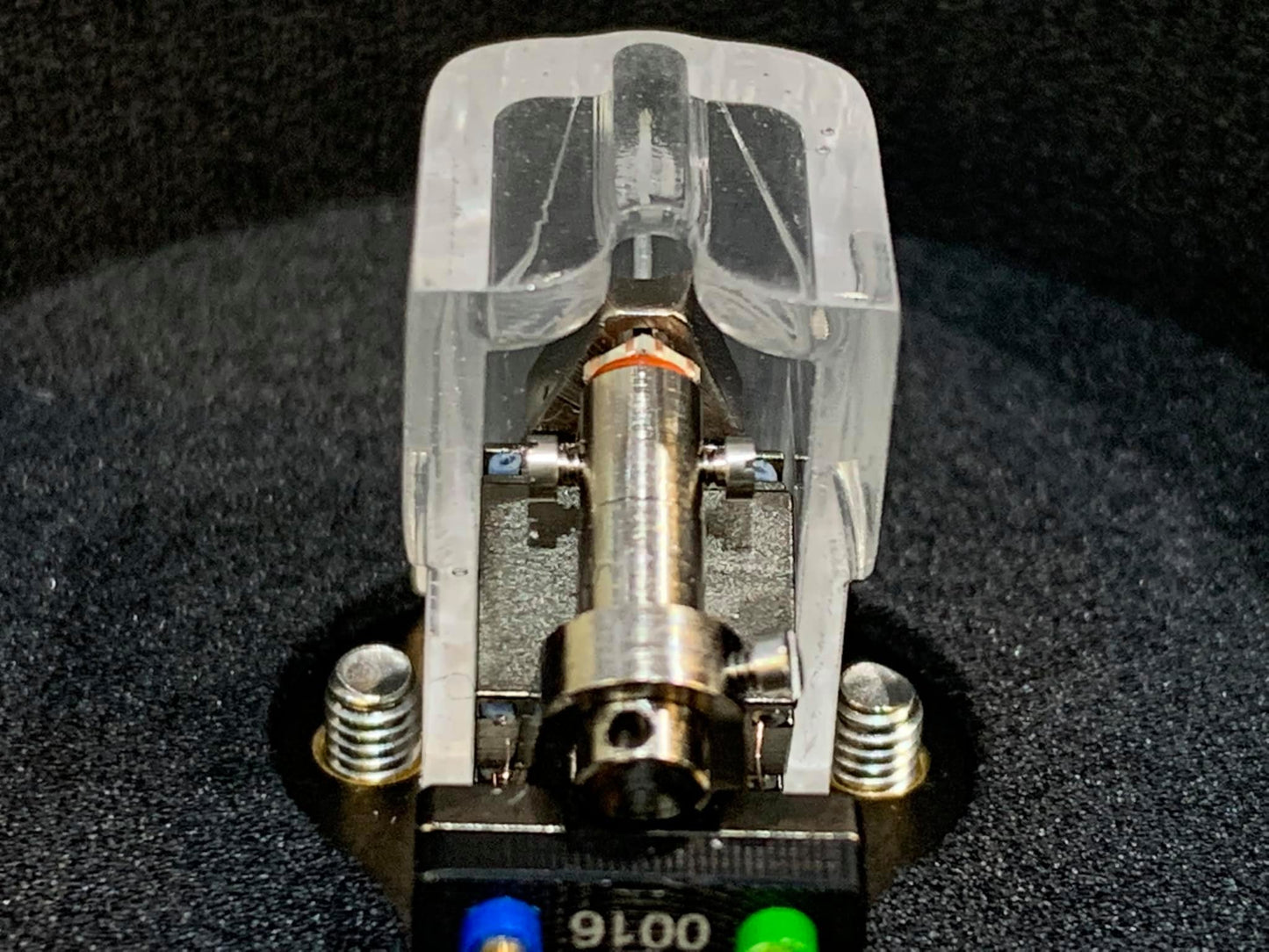
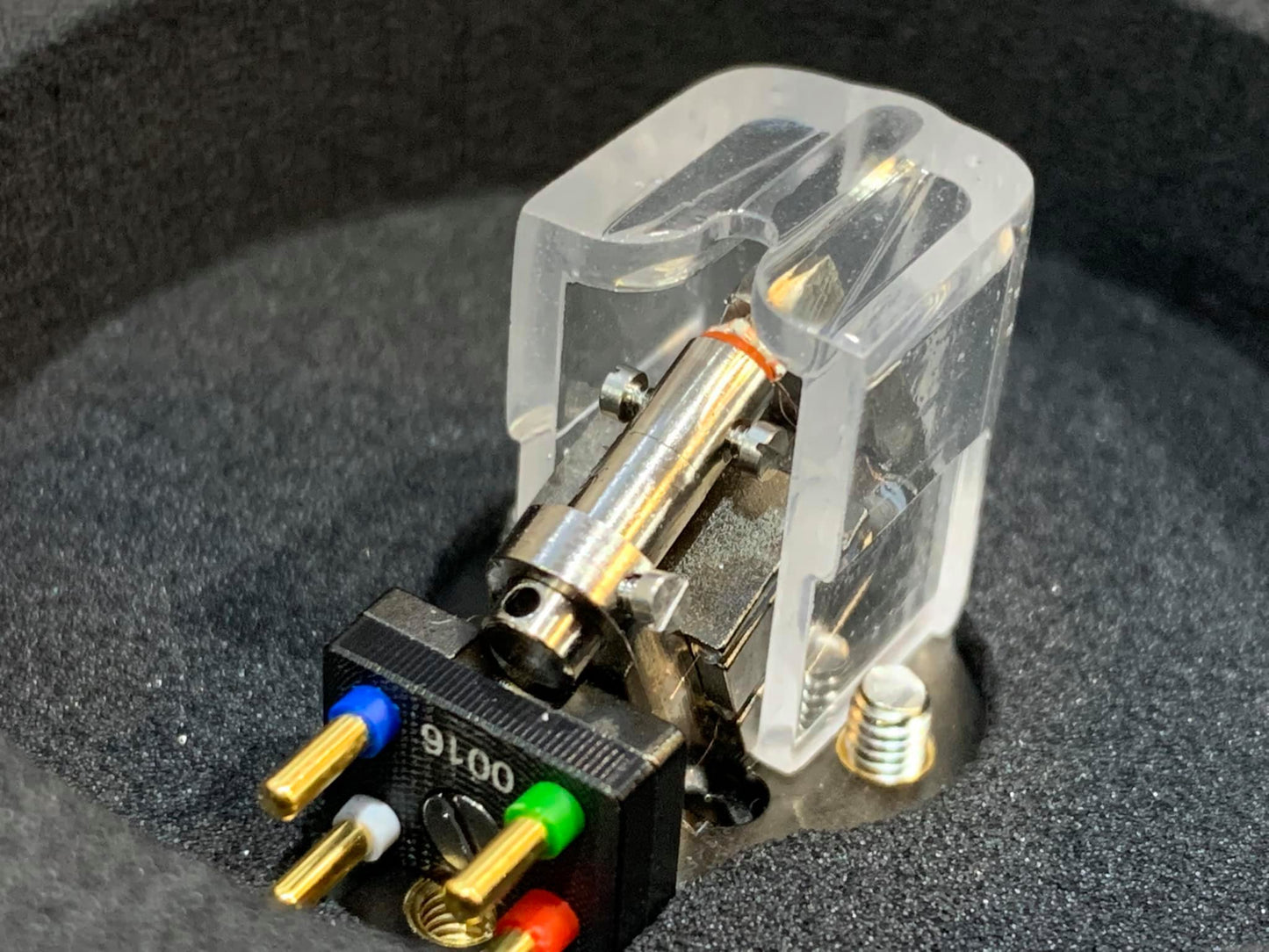
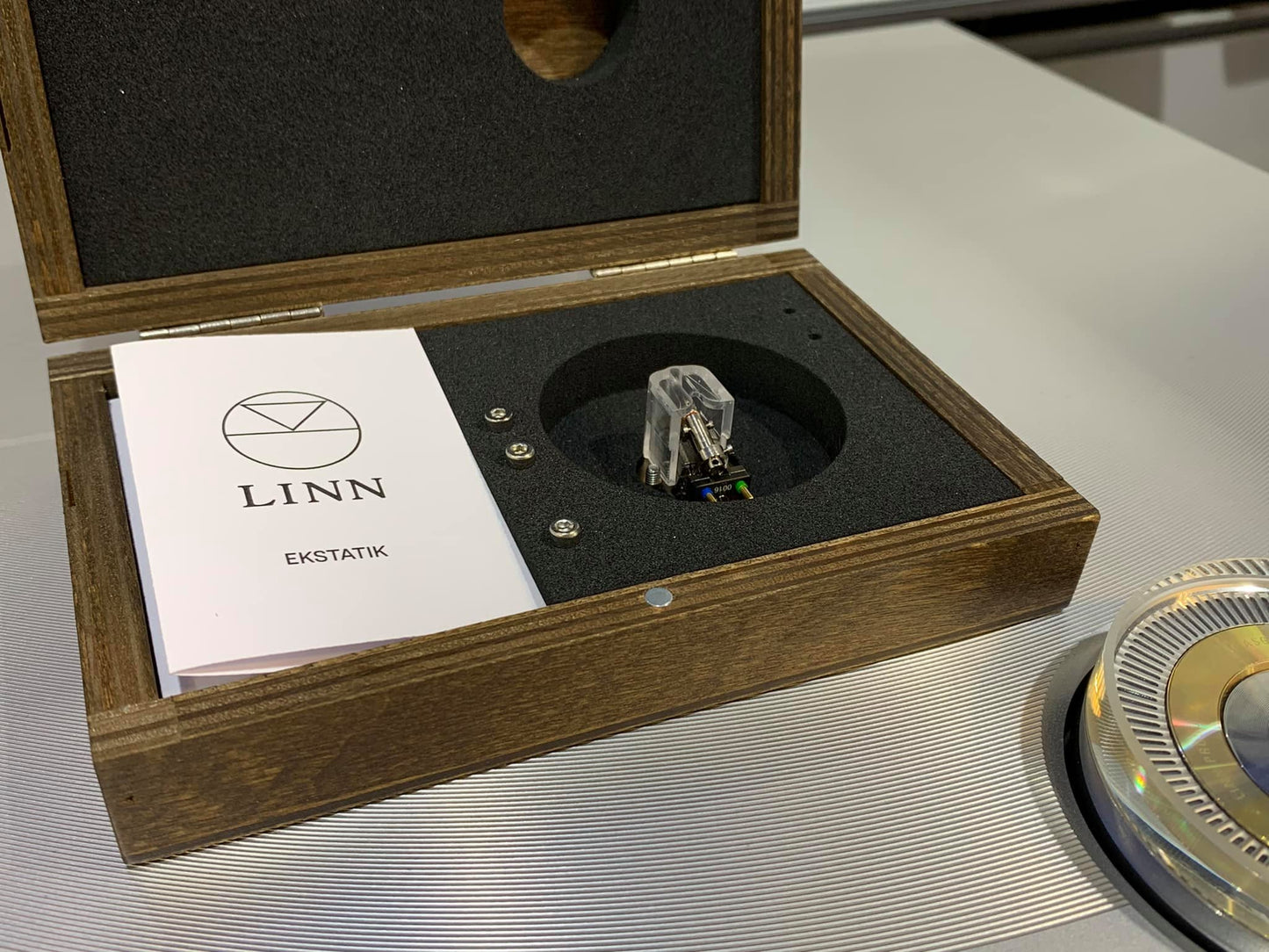
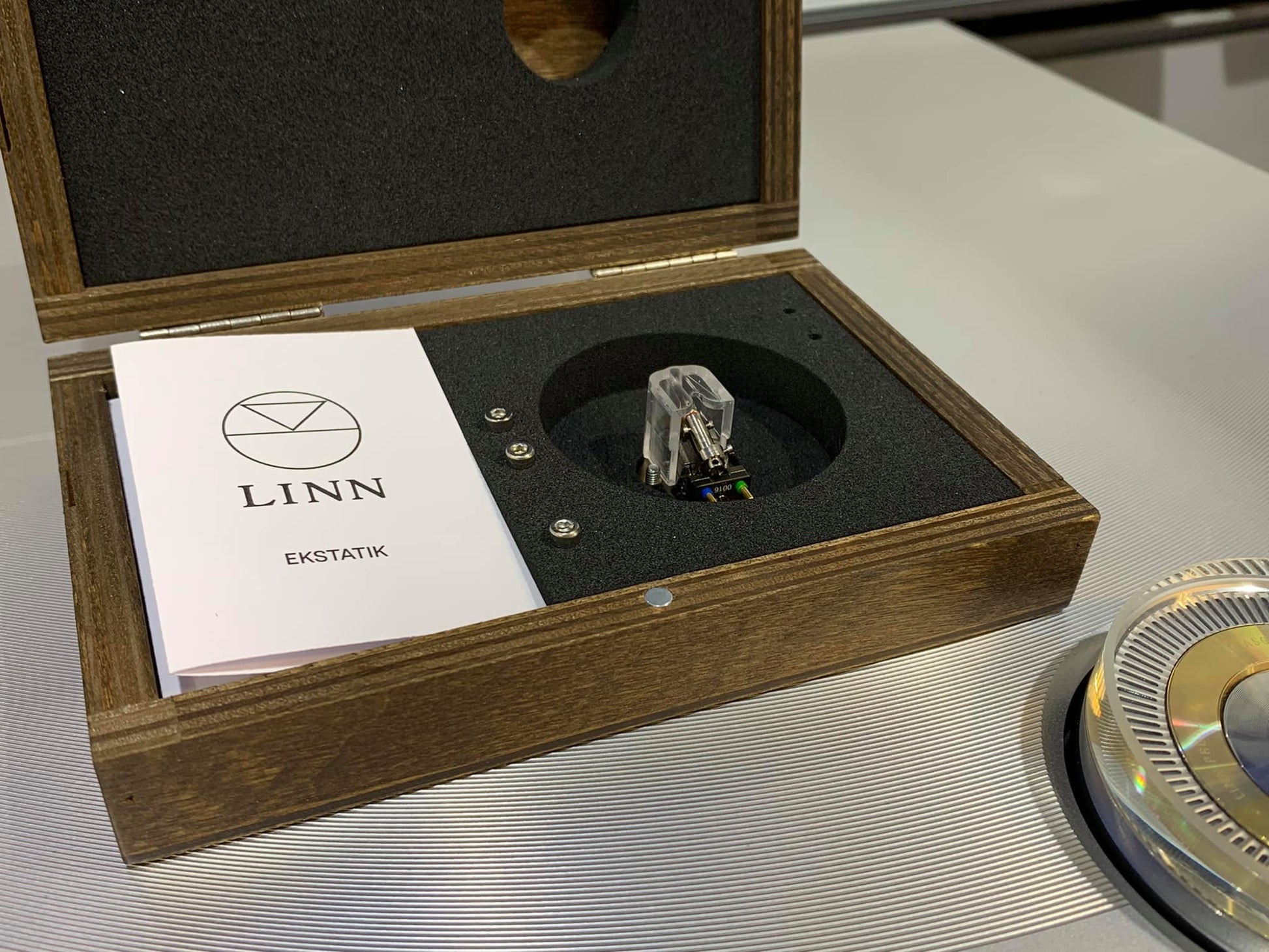
The Ekstatik is Linn's reference moving coil cartridge — the cartridge fitted as standard to the Klimax LP12, designed in partnership with the Ekos SE tonearm, and the component that sits at the summit of everything Linn has learned about analogue signal retrieval across more than five decades of LP12 development. At £6,050, it is a serious commitment. It is also the most capable cartridge Linn has ever made — a design in which every material choice, every tolerance, and every dimensional decision was made in service of a single objective: to retrieve more of what is on the record and add less of itself to what it finds there.
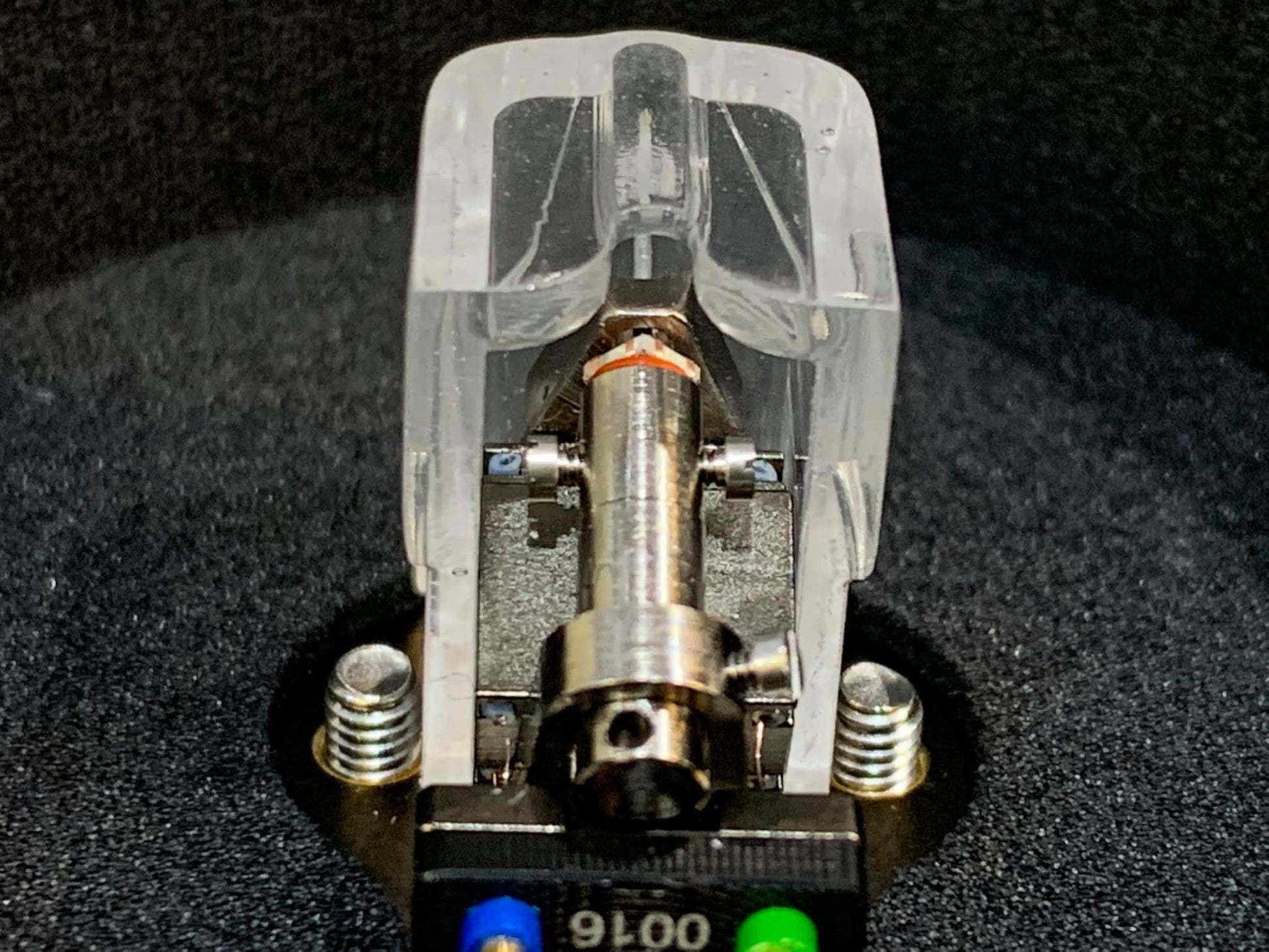
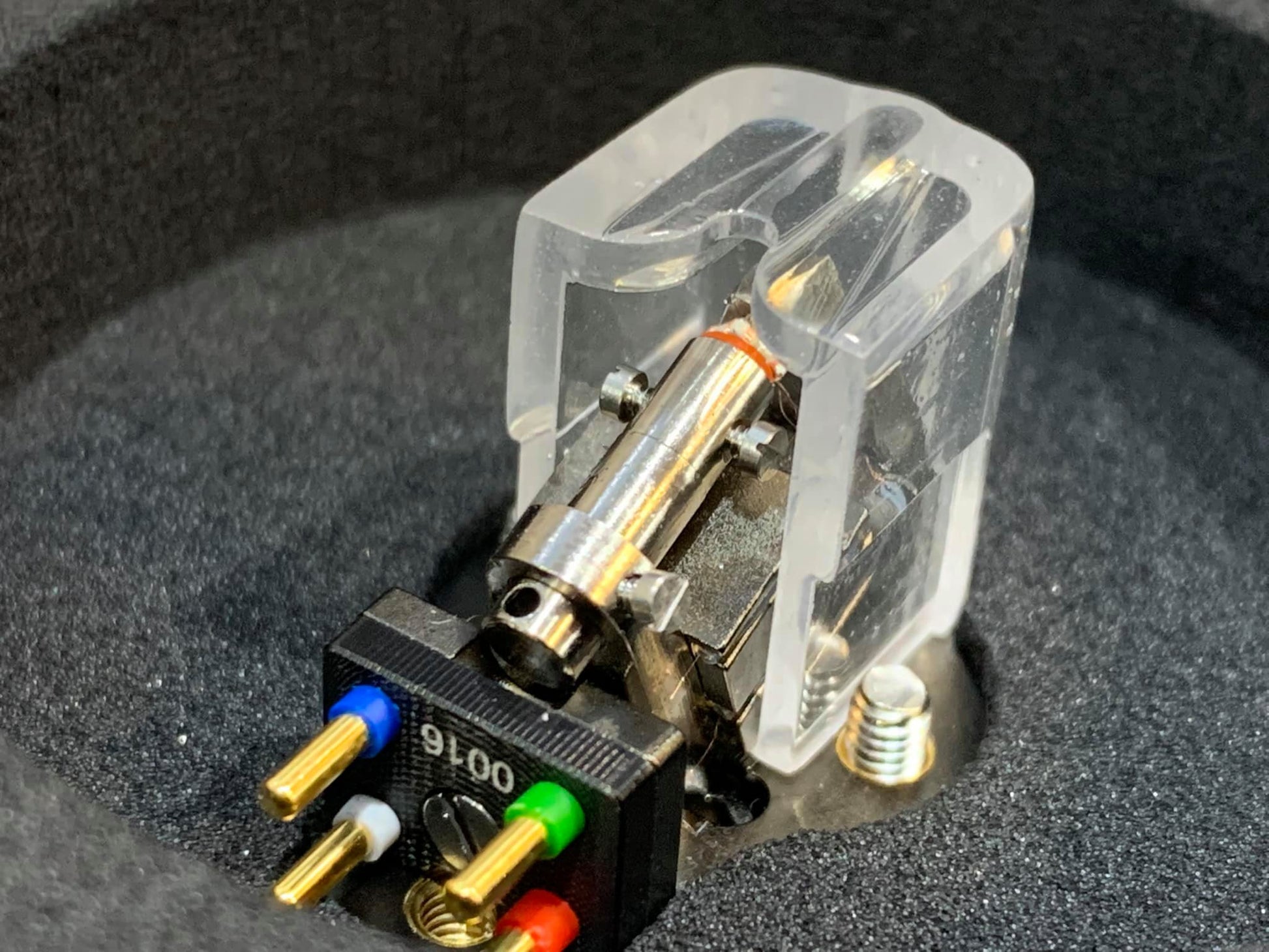
The Ekstatik introduces two material choices that set it apart from everything below it in the Linn range — and from most of what is available at any price: a sapphire cantilever and a micro-ridge stylus. Together, they define the Ekstatik's character as a transducer of exceptional speed, resolution, and neutrality.
Sapphire Cantilever — Speed and Precision
The cantilever is the bridge between the stylus tip and the generator coils. Its job is to transmit the motion of the stylus — tracking the groove modulations cut into a record at frequencies extending to the upper limits of the audio band and beyond — to the generator with the minimum of delay, distortion, or energy storage. Every material choice for a cantilever involves a trade-off between stiffness, mass, and internal damping. Boron — used in the Kandid and Kendo — is already excellent: stiff, light, and with high internal resonant frequencies that sit well outside the audio band.
Sapphire is stiffer still. Harder, denser, and with a higher Young's modulus than boron, it transmits stylus motion to the generator with greater accuracy and less self-resonance. The practical result is faster transient response, more resolved high-frequency detail, and a lower noise floor at the generator — a cartridge that is more transparent, less coloured, and less obviously present in the signal chain. The Ekstatik's sapphire cantilever is the correct choice for a cartridge operating at this level, in a system — the Klimax LP12 with Ekos SE — capable of revealing everything the cantilever's superior transmission characteristics make available.
Micro-Ridge Stylus — Contact, Precision, Longevity
The micro-ridge stylus profile makes contact with the groove wall across a larger and more precisely defined area than a fine-line or super-fine-line profile. The groove wall carries the recorded signal; the precision with which the stylus traces it determines how accurately that signal is recovered. A larger contact area means the micro-ridge follows groove modulations more faithfully — retrieving higher-frequency content with lower distortion — and distributes the tracking load over a wider surface, reducing both stylus wear and groove wear compared to profiles with smaller contact patches.
The practical consequence is audible: distortion at high frequencies and towards the inner grooves — where groove modulation is at its most demanding and where inferior stylus profiles begin to lose composure — is substantially lower. Music that is recorded at high levels or at high frequencies is tracked cleanly and without the hardening or compression that a less capable stylus profile would introduce. The micro-ridge is also a more durable profile — longevity that matters on a cartridge at this investment level.
Body — Mass, Rigidity, and Damping
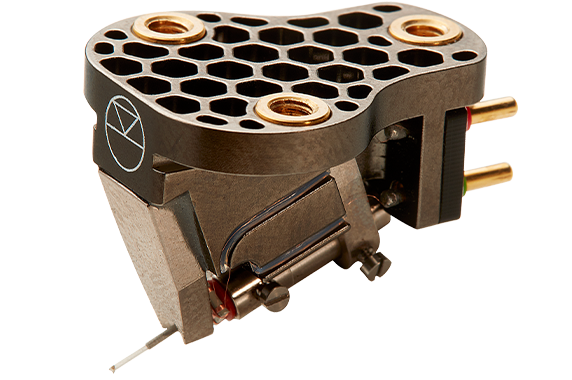
The Ekstatik body is machined from 7075-grade aluminium in a honeycomb pattern — a skeletonised structure in which material is removed strategically to reduce overall mass to approximately 7 grams while preserving the rigidity necessary to prevent energy accumulating in the body and returning to the generator as noise. The lower the cartridge body mass, the less inertial load the tonearm bears — important at Ekos SE level, where the arm's bearing tolerances are calibrated for a specific range of cartridge masses.
Diamond-like Carbon (DLC) coating is applied to the chassis — the same surface treatment used on the Karousel bearing's spindle tip — providing a hard, low-friction outer surface. Aluminium-bronze threaded inserts at the three mounting points resist the compression forces of mounting without the risk of thread damage that direct aluminium threads would present.
Triple-Point Mounting and System Integration
The Ekstatik uses a three-point mounting system that fixes its installation geometry precisely and reproducibly. Paired with Linn's alignment geometry on the Ekos SE, this ensures that every Ekstatik arrives at the same geometrically correct position relative to the record surface. The 1.2mm gold pins at the cartridge output connect to the Ekos SE's internal wiring, continuing a signal path that has been designed end-to-end with the Ekstatik as the intended starting point.
The Ekstatik and Ekos SE are not merely compatible. They are designed as a matched system — arm and cartridge developed together, sharing a coherent design intent around energy dissipation, mass management, and signal transmission. The relationship between them is reflected in the Klimax LP12's overall performance in a way that no individually selected arm-and-cartridge combination, however carefully chosen, can fully replicate.
Technical Specifications
| Type | Moving coil |
| Output voltage | 0.45 mV @ 3.54 cm/s |
| Tracking force | 2.0 g |
| Channel separation | Better than 30 dB at 1 kHz |
| Channel balance | < 1 dB at 1 kHz |
| Cantilever | Sapphire |
| Stylus profile | Micro-ridge |
| Body material | Machined honeycomb 7075 aluminium with DLC coating |
| Body inserts | Aluminium-bronze |
| Cartridge mass | 7 g |
| Load resistance | 100 Ω |
| Load capacitance | 1 nF |
| Coil wire | Copper 4N |
| Mounting points | 3 |
Who Is It For?
The Ekstatik is the correct cartridge for an LP12 at Klimax specification — specifically with an Ekos SE tonearm, Keel sub-chassis, Radikal power supply, and a phono stage or ADC capable of working at this level. It is not a cartridge to consider as an isolated upgrade: the Ekstatik's capabilities are most fully expressed when every component upstream and downstream can keep pace with what it retrieves. On the correct build — the Linn Klimax LP12 — it is the finishing piece that resolves all the detail the LP12 platform is capable of delivering.
For those at an intermediate level of LP12 build, the Kandid and Kendo remain formidable performers at their respective price points. The step to Ekstatik is for when the rest of the system has caught up with what the cartridge will reveal — and when analogue replay at its highest current standard is the unambiguous objective.
Buying from Martins Hi-Fi
Martins Hi-Fi has been in Norwich since 1968. Elizabeth Gould runs the business today, and we stock only brands we have heard properly and stand behind.
Cartridge fitting and alignment on a reference LP12 is precision work — stylus rake angle, azimuth, and vertical tracking force all need to be set correctly, and small errors at this level are audible. We carry out complete installation and alignment as part of our LP12 servicing work, and we will not return a deck until it is set up properly. If you are considering the Ekstatik as part of a broader Klimax LP12 build, speak to us first — the correct sequence of upgrades matters, and we can advise on the most effective route.
When you get in touch, you'll be speaking with Dave, Chris and Tim — experienced specialists who can advise on this product and your whole system.
Contact us at info@martinshifi.co.uk, call 01603 627010, or WhatsApp on 07554 687137. You can read more about how we work on our Why Martins Hi-Fi page. We are at 85–91 Ber Street, Norwich, NR1 3EY.